
Can Heavy Rain Cause a Septic Backup?

Yes, heavy rain can cause or contribute to a septic backup. When the soil surrounding a septic drain field becomes saturated, it may not be able to absorb additional wastewater from the home. This can slow the entire septic system and cause drains to gurgle, toilets to flush poorly or sewage to back up into the house. Heavy rain may also expose an existing problem with the septic tank, drain field or underground lines.
For homeowners in Howell, Livingston County and surrounding Southeast Michigan communities, septic trouble is especially common after prolonged rain, rapid snowmelt or repeated storms. Properties with clay-heavy or slow-draining soil may remain saturated even after the rain stops.
The important question is whether the problem is temporary—or whether the wet weather has revealed a septic system that already needs maintenance or repair.
Quick Answer: Why Can Heavy Rain Cause a Septic Backup?
A septic system depends on the soil in its drain field to accept and filter liquid wastewater. Heavy rain can fill the open spaces in that soil with groundwater. When the drain field cannot accept more liquid, wastewater moves through the system more slowly and may begin backing up toward the septic tank and home.
The risk may be higher when:
The septic tank is already due for pumping
The drain field is aging, clogged or beginning to fail
Surface runoff collects over the septic area
A tank, riser or lid allows groundwater to enter
A septic line is blocked, damaged or affected by tree roots
The household continues using large amounts of water during the storm
Rain does not automatically mean a septic system is failing. However, recurring backups during wet weather should not be treated as normal.
How a Septic System Normally Handles Wastewater
Wastewater from toilets, sinks, showers and appliances travels through the main line into the septic tank. Inside the tank, solids settle to the bottom, grease and lighter material rise to the top, and liquid wastewater flows toward the drain field.
The drain field—also called a leach field—distributes that liquid through perforated pipes into the surrounding soil. The soil then filters and absorbs the wastewater.
Under normal conditions, this process happens gradually. During heavy or prolonged rain, the soil may already be holding as much water as it can. The septic system continues receiving wastewater from the home, but the drain field has less capacity to accept it. That hydraulic pressure can slow the system or contribute to a backup.
Can Rainwater Get Inside the Septic Tank?
Rainwater should not normally enter a properly sealed septic tank. However, groundwater or surface runoff may reach the system through damaged components, poorly sealed risers, cracked lids or other openings.
Water may also collect over the septic area when downspouts, sump pumps, driveway runoff or landscape grading direct it toward the tank or drain field. This does not always mean water is entering the tank itself, but it can keep the surrounding soil saturated and prevent the drain field from working efficiently.
Because several different issues can produce the same symptoms, a professional evaluation is often needed to identify whether the restriction is in the home’s plumbing, the main septic line, the tank or the drain field.
Warning Signs of a Rain-Related Septic Problem
Septic problems may appear during a storm or in the days after heavy rain. Warning signs include:
Multiple drains emptying more slowly than usual
Toilets that flush slowly or incompletely
Gurgling or bubbling sounds from drains and toilets
Sewage odors inside the home or near the septic system
Wastewater backing up through a bathtub, shower, toilet or floor drain
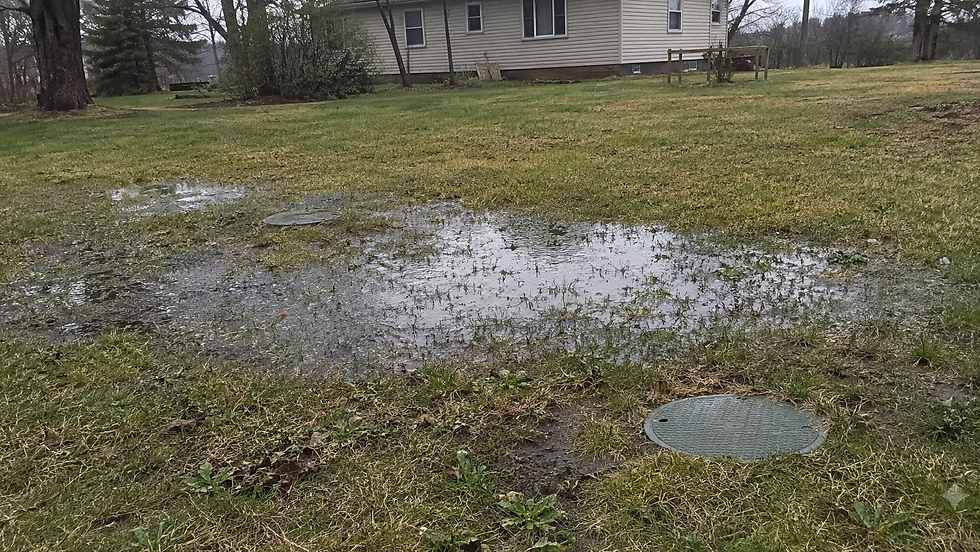
Standing water or unusually soggy soil near the tank or drain field
A septic alarm sounding during or after wet weather
Grass over the drain field becoming unusually green or fast-growing
One slow sink may simply have a localized clog. When several fixtures are affected at the same time, the problem is more likely to involve the main plumbing line or septic system.
If you are seeing these symptoms beyond periods of heavy rainfall, review these additional signs that a septic system may be failing.
Does a Backup After Rain Mean the Septic Tank Is Full?
Not necessarily. An overfilled septic tank can contribute to a backup, but saturated soil can cause similar symptoms even when the tank is not overdue for pumping.
This distinction matters because septic tank pumping removes accumulated solids and liquid from the tank, but it does not instantly dry a saturated drain field or repair a damaged line. Pumping may be part of the solution, but the system should be assessed before assuming that it is the only service needed.
Heavy rain often exposes problems that were already developing, including:
Excess solids in a tank that has not been pumped regularly
A clogged effluent filter or damaged outlet baffle
A blocked or collapsed pipe
Root intrusion in the septic line
A pump or electrical problem in a pressurized system
A drain field affected by biomat buildup, soil compaction or age
Damaged tank components that allow groundwater infiltration
The source of the problem determines whether the appropriate response is pumping, cleaning, line repair, component repair, drainage correction, drain field rehabilitation or another solution.
What Should You Do If Your Septic System Backs Up After Heavy Rain?
Reduce water use immediately. Every gallon sent down a drain adds more wastewater to an already stressed system.
Until the problem can be evaluated:
Do not run the washing machine or dishwasher
Avoid baths and postpone showers when possible
Flush toilets only when necessary
Stop using the garbage disposal
Do not repeatedly run water to test slow drains
Keep children and pets away from standing wastewater
Avoid driving or using heavy equipment over the septic tank and drain field
If sewage is entering the home, avoid direct contact and keep everyone away from the affected area. Septic wastewater may contain harmful bacteria and other contaminants.
Never enter a septic tank or lean into an open tank. Septic tanks can contain toxic gases and may have unsafe lids or openings.
A sewage backup, overflow or widespread loss of drainage may require 24-hour emergency septic service, particularly when wastewater is entering a living area or creating a safety concern.
Will the Septic Problem Go Away When the Ground Dries?
The system may begin working normally again after the rain stops and the soil has enough time to drain. That is more likely when an otherwise healthy septic system was temporarily overwhelmed by an unusually severe weather event.
However, improved drainage does not always mean the underlying issue is resolved. Wet weather may be the trigger that reveals reduced drain field capacity, excess solids, a damaged pipe or another developing problem.
Consider a professional inspection when:
The same symptoms return after ordinary rainfall
Slow drains continue after the ground begins drying
Sewage odors or wet spots persist
The septic alarm repeatedly activates
The tank requires unusually frequent pumping
The system has a history of drain field problems
Recurring trouble can indicate that the drain field is no longer accepting wastewater effectively. Depending on the condition of the system, septic field rehabilitation may help restore performance without requiring a complete drain field replacement.
How to Help Prevent Septic Backups During Heavy Rain
Michigan homeowners cannot prevent heavy rain, but they can reduce unnecessary stress on their septic systems.
Keep Stormwater Away From the Septic Area
Direct roof downspouts, sump pump discharges and other drainage away from the septic tank and drain field. If water consistently pools in that area, the property may need grading or drainage improvements.
Reduce Household Water Use During Prolonged Rain
Spread laundry loads across several days and avoid running multiple water-using appliances at once. Repair leaking toilets and faucets so the system is not processing unnecessary water.
Maintain a Regular Pumping Schedule
Many residential septic tanks are pumped approximately every three to five years, but the right schedule depends on household size, tank capacity, water use and the amount of solids entering the system. Regular pumping reduces the risk of solids moving into and damaging the drain field.
Protect the Tank and Drain Field
Do not park vehicles, construct buildings or operate heavy machinery over the septic area. Added weight can compact the soil or damage tanks and underground pipes. Avoid planting deep-rooted trees and shrubs near septic components.
Address Small Warning Signs Early
Recurring odors, slow drains and wet areas should not be ignored simply because sewage has not entered the home. Early diagnosis may prevent a smaller maintenance or repair issue from turning into a more disruptive septic backup.
Heavy Rain or a Failing Drain Field: How Can You Tell the Difference?
A temporarily saturated drain field often improves as the weather clears and the soil drains. A failing drain field is more likely to cause persistent or recurring symptoms, including backups during normal water use, sewage odors, standing water when it has not recently rained and unusually lush vegetation over the field.
Age alone does not determine whether a drain field has failed. Its condition can be affected by maintenance history, household water use, soil conditions, installation, damage and the amount of solids that have reached the field.
If you are unsure, read more about the signs of a failing leach field in Livingston County. An inspection is the best way to distinguish temporary weather-related saturation from a system that requires repair or rehabilitation.
Frequently Asked Questions About Rain and Septic Backups
How long should a septic system take to recover after heavy rain?
There is no single recovery time because rainfall totals, soil conditions, groundwater levels and drain field condition differ by property. Some systems improve soon after the surrounding soil drains, while continued symptoms may point to a blockage, maintenance issue or failing drain field.
Should I have my septic tank pumped immediately after heavy rain?
Call a septic professional if the system is backing up, but do not assume pumping alone will correct the problem. A saturated drain field, damaged pipe or other system issue may also need to be addressed. A professional can determine whether pumping is appropriate and safely evaluate the rest of the system.
Can a flooded drain field permanently damage a septic system?
Temporary saturation does not always cause permanent damage. However, repeated flooding can interfere with treatment, strain system components and reveal or worsen an existing drain field problem. Keeping runoff away from the septic area can help reduce the risk.
Why does my toilet gurgle when it rains?
Gurgling may occur when air and wastewater cannot move normally through the plumbing or septic system. Possible causes include a saturated drain field, a full tank, a blocked main line or a plumbing vent issue. If multiple fixtures are affected, schedule an inspection.
Can heavy rain make a septic alarm go off?
Yes. In systems with pumps or high-water alarms, prolonged rain and saturated ground may contribute to elevated liquid levels. Reduce water use and contact a septic professional if the alarm remains active or wastewater is not draining properly.
Is standing water over the drain field always caused by rain?
No. Rain can temporarily saturate the area, but standing water that remains after the rest of the property dries—or appears during dry weather—may indicate surfacing wastewater or a drain field problem. Avoid the area and have the system inspected.
Get Help With a Septic Backup in Howell and Southeast Michigan
If several drains are slowing down, your septic alarm is sounding or wastewater is backing up into your home, do not wait for the problem to become more serious.
Anything Outdoors Septic and Excavating provides septic pumping, inspections, repairs, drain field services and 24-hour emergency septic assistance from its Howell location. We serve homeowners throughout Livingston, Oakland and Washtenaw counties, along with select areas of Wayne and Ingham counties.
Call (517) 295-7757 or contact Anything Outdoors to have your septic system evaluated.


Comments