
Standing Water Over Your Septic Field: Is Your Tank Full or Is the Field Failing?
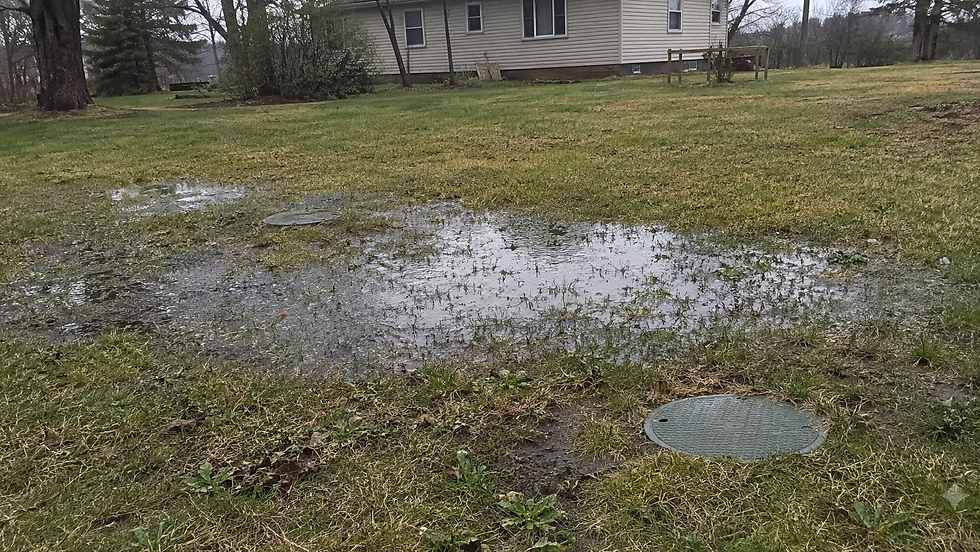
Standing water over your septic field can mean the system is receiving more water than it can handle. The cause may be an overdue septic tank pumping, unusually heavy water use, saturated soil after rain or snowmelt, a damaged component, or a drain field that is beginning to fail.
The important thing to understand is that a septic tank is normally filled with liquid to its operating level. When people say their tank is “full,” the real problem is usually excessive solid buildup, wastewater rising above the normal level, or water that cannot move from the tank into the drain field properly.
If water is pooling over your septic field—especially during dry weather—limit household water use and have the system inspected. Pumping may solve the problem if the tank contains too many solids, but it will not repair a clogged, saturated, or failing drain field.
Quick Answer: Full Septic Tank or Failing Drain Field?
Standing water does not automatically mean your septic field needs to be replaced.
A septic tank that has not been pumped recently may contain too much sludge and scum, restricting the normal movement of wastewater. However, if the tank is pumped and water quickly rises again, or standing water continues to appear over the drain field, the problem may be farther downstream.
Possible causes include:
Excessive solids inside the septic tank
Heavy household water use
Soil saturation after prolonged rain or snowmelt
A clogged effluent filter
A damaged or blocked outlet pipe
A malfunctioning pump or control component
Uneven flow from the distribution box
Organic buildup within the drain field
A drain field that can no longer absorb wastewater effectively
The only reliable way to tell the difference is to inspect the septic tank, outlet components, distribution system, and drain field.
Why Is Water Pooling Over My Septic Field?
A properly functioning drain field distributes treated wastewater into the surrounding soil, where it is filtered and absorbed. Standing water can develop when wastewater reaches the field faster than the soil can accept it.
Several different conditions can cause this.
Your Septic Tank Needs to Be Pumped
Over time, sludge settles to the bottom of the septic tank while grease and other floating material form a scum layer near the top. These materials must be removed periodically.
If too much solid material accumulates, it can reduce the tank’s working capacity and may eventually reach the outlet. Solids can then clog the effluent filter, outlet piping, distribution box, or drain field.
Septic tank pumping may correct the immediate problem when excessive buildup is restricting the system. It can also help prevent additional solids from entering and damaging the drain field.
However, pumping the tank does not automatically mean the underlying problem has been resolved. If the field is already clogged or failing, pumping may only provide temporary relief.
The Drain Field Is Saturated From Rain or Snowmelt
Heavy rain, melting snow, a high seasonal water table, or poor drainage around the property can temporarily saturate the soil. When the ground is already holding as much water as it can, the drain field may struggle to absorb additional wastewater from the home.
This can be especially noticeable during wet Michigan springs or after several days of heavy rain.
Pooling that appears only after extreme weather and disappears as the soil dries may be related to temporary saturation. Nevertheless, repeated standing water in the same area should be evaluated. Roof drains, sump pumps, grading problems, or surface runoff may be directing additional water toward the septic field and placing unnecessary stress on the system.
Your Household Is Using Too Much Water at Once
Every septic system has a limited amount of wastewater it can process within a given period. Several loads of laundry, long showers, running the dishwasher, and hosting additional guests on the same day can hydraulically overload the system.
Even a healthy drain field may have trouble keeping up with a sudden increase in water use. An older or partially restricted field will usually show problems sooner.
Spreading laundry and other high-water-use activities throughout the week can reduce the strain on your system. If ordinary household water use repeatedly causes pooling, however, the system should be inspected.
A Septic Pump or System Component Has Failed
Not every system relies entirely on gravity. Some septic systems use pumps, floats, control panels, or other components to move wastewater to the drain field.
A failed pump, clogged filter, malfunctioning float, damaged pipe, or problem inside the distribution box can prevent wastewater from reaching the field correctly. This may cause water to back up inside the tank, surface in one part of the yard, or trigger a high-water alarm.
These problems require diagnosis before anyone can determine whether pumping, component repair, pipe cleaning, or work on the drain field is needed.
The Septic Field Is Beginning to Fail
A septic field can lose its ability to absorb wastewater when solids, grease, and organic material enter the field or when the soil becomes excessively clogged. Soil compaction, vehicle traffic, tree-root intrusion, poor original design, age, and consistently excessive water use may also contribute to field problems.
A failing drain field does not always stop working all at once. Its capacity may decrease gradually, producing warning signs such as:
Soft, wet, or spongy ground over the field
Standing water during otherwise dry conditions
Sewage or sulfur-like odors outdoors
Unusually green or fast-growing grass over the field
Slow drains throughout the home
Gurgling plumbing fixtures
Toilets that do not flush normally
Wastewater backing up into tubs, showers, or floor drains
Standing water combined with odors, slow drains, or sewage backups makes a drain field problem more likely and should be addressed promptly.
How Can You Tell the Difference?
The symptoms can offer clues, but they cannot confirm the diagnosis by themselves.
What You Notice | What It May Indicate |
The tank has not been pumped in several years | Excessive sludge and scum may be restricting the system |
Pooling began after unusually heavy rain | Temporarily saturated soil or drainage problems may be contributing |
Problems appear after laundry, guests, or heavy water use | The system may be hydraulically overloaded |
A septic alarm is sounding | A pump, float, control, or high-water condition may be involved |
Water remains over the field during dry weather | The field may not be absorbing wastewater properly |
Pumping helps only briefly | The restriction may be in the outlet, distribution system, or drain field |
Several drains are slow or sewage is backing up | Wastewater is not moving through the system normally |
The field smells like sewage or has unusually lush grass | Wastewater may be reaching or approaching the ground surface |
A professional septic inspection can determine the tank’s sludge level, confirm whether wastewater is leaving the tank, check pumps and filters, evaluate the distribution box, and look for evidence of ponding or uneven drainage within the field.
Will Pumping the Septic Tank Fix Standing Water?
Pumping may fix the problem when excessive solids inside the tank or a clogged component are responsible. It may also lower the immediate wastewater level and reduce the risk of a backup while the rest of the system is inspected.
Pumping will not restore a drain field that can no longer accept wastewater.
If the tank fills unusually quickly after being pumped, that often indicates wastewater is flowing back from a saturated field, groundwater is entering the system, or effluent cannot leave the tank normally. Repeatedly pumping the tank without identifying the cause can postpone the real repair while the condition continues to worsen.
The best approach is to combine pumping with a complete evaluation when standing water is present.
Does Standing Water Mean the Drain Field Must Be Replaced?
Not necessarily.
Depending on the cause and condition of the system, the solution could involve:
Pumping and cleaning the septic tank
Cleaning or replacing the effluent filter
Repairing a damaged inlet or outlet pipe
Diagnosing or replacing a septic pump
Correcting a malfunctioning float or control panel
Repairing or leveling the distribution box
Redirecting roof, sump-pump, or surface water away from the field
Reducing excessive household water use
Rehabilitating the existing septic field
Replacing all or part of the drain field
For qualifying systems, septic field rehabilitation may provide an alternative to complete replacement. Anything Outdoors Septic and Excavating offers RioVation aerobic treatment systems designed to address organic buildup and help restore wastewater absorption within an existing field.
Because every property and septic system is different, the field must be evaluated before determining whether rehabilitation or replacement is appropriate.
What Should You Do When You See Standing Water?
If water is pooling near your septic tank or drain field, take the following precautions:
Reduce water use immediately. Avoid laundry, long showers, dishwashing, and other unnecessary water use until the system is inspected.
Keep people and pets away. Surfacing wastewater may contain harmful bacteria, viruses, and other contaminants.
Do not drive over the area. Vehicles and heavy equipment can compact the soil or damage septic lines and system components.
Do not dig into or open the system yourself. Septic tanks contain dangerous gases and should only be accessed by qualified professionals.
Note recent conditions. Tell the septic provider about heavy rainfall, snowmelt, unusually high water use, alarms, odors, slow drains, and the date of the last pumping.
Schedule a professional septic inspection. The sooner the cause is identified, the better the chance of preventing a sewage backup or more extensive system damage.
If sewage is backing up inside your home or wastewater is actively surfacing outdoors, stop using water and request emergency septic service.
Can You Prevent Water From Pooling Over the Drain Field?
Not every septic problem is preventable, but proper maintenance can reduce the risk.
Homeowners should:
Have the tank inspected and pumped as needed
Avoid flushing wipes, grease, hygiene products, and other non-degradable materials
Repair leaking toilets and plumbing fixtures
Spread laundry loads throughout the week
Keep roof drains and sump-pump discharge away from the septic field
Avoid planting trees with aggressive roots near the system
Never park, build, or place heavy equipment over the field
Keep accurate records of pumping, inspections, and repairs
Schedule service when warning signs first appear
The U.S. Environmental Protection Agency recommends routine septic inspections and pumping based on tank size, household occupancy, water use, and solid accumulation. Waiting for sewage to surface or back up into the home can allow a manageable maintenance issue to become a much more expensive repair.
Frequently Asked Questions About Standing Water and Septic Fields
Is standing water over a septic field always sewage?
No. It may be rainwater, melting snow, groundwater, or surface runoff. However, water that repeatedly appears over the drain field—especially during dry weather or alongside sewage odors—may contain wastewater and should be treated cautiously.
Can heavy rain make a septic tank appear full?
Yes. Saturated soil can prevent wastewater from leaving the tank normally. Groundwater may also enter through damaged components. Because a septic tank normally holds liquid, a professional must evaluate whether the water level is abnormal and determine why the system is not draining properly.
How long should a septic field remain wet after heavy rain?
There is no single timeframe that applies to every property. Soil type, drainage, groundwater level, weather, and system condition all affect drying time. If the area remains wet after the rest of the yard has dried, develops an odor, or becomes wet repeatedly, schedule an inspection.
Can a septic field recover after being saturated?
A healthy drain field may begin functioning normally after temporary soil saturation improves and household water use is reduced. A clogged or failing field generally will not be permanently corrected by waiting for it to dry.
Why did standing water return after my septic tank was pumped?
The drain field may be saturated or restricted, wastewater may be flowing back toward the tank, or another component may be preventing proper distribution. Pumping removes material from the tank but does not repair a failing field or damaged downstream component.
Is standing water over the septic field an emergency?
It can be. If the water smells like sewage, wastewater is backing up inside, an alarm is sounding, or the wet area is accessible to people or animals, stop using water and request service immediately.
Septic Field Inspections and Repairs Near Howell, Michigan
Standing water is a warning that your septic system needs attention, but it does not tell you which part of the system is responsible. The tank may need pumping, a component may need repair, the soil may be temporarily saturated, or the drain field may be losing its ability to absorb wastewater.
Anything Outdoors Septic and Excavating provides professional septic services, system diagnostics, pumping, repairs, and septic field rehabilitation in Howell and throughout Livingston County and surrounding communities, including Brighton, Hartland, Pinckney, Fowlerville, Hamburg, Dexter, Milford, and nearby areas.
If you notice standing water, sewage odors, slow drains, or another sign of septic trouble, call (517) 295-7757 or contact Anything Outdoors Septic and Excavating online to schedule an inspection.


Comments